Technical SEO Indexing Service: Buyer Guide for 2026

TL;DR
A technical SEO indexing service should prove which URLs matter, why search engines skip them, and what workflow will improve discovery. Strong buyers should expect audits, prioritization, submission management, monitoring, reporting, and clear technical fixes.
Indexing is no longer a passive technical task, especially for large sites that publish, update, and retire URLs every day. A technical SEO indexing service helps search engines discover eligible pages faster, while platforms such as Indexerhub support structured submission and monitoring workflows for teams managing scale.
Table of Contents
What is a technical SEO indexing service?
A technical SEO indexing service is outside support that audits crawlability, identifies index blockers, prioritizes valuable URLs, submits eligible pages, and reports index coverage over time. Search engine optimization means improving website visibility and performance in search results, and indexing sits between crawl access and ranking eligibility.
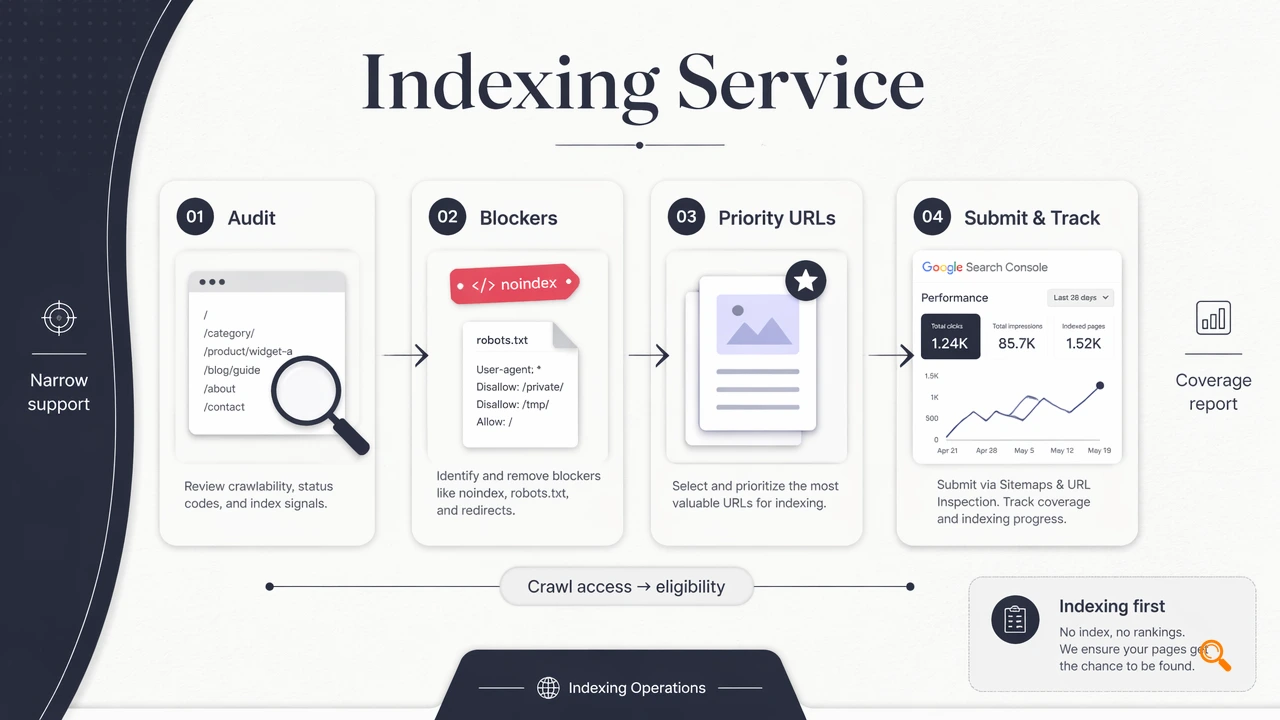
Common service providers market broad technical SEO services, but indexing support should be narrower and more operational. In a SERP set of 102 results, competitor pages commonly emphasized technical audits, crawlability, site structure, and Google Search Console setup, yet many were less explicit about URL queues, submission workflows, and index monitoring.
Key insight: indexing work should connect technical diagnosis with repeatable operations, not stop at a one-time audit.
Core deliverables buyers should expect
| Deliverable | What it should answer |
|---|---|
| Index audit | Which important URLs are indexed, excluded, duplicated, or undiscovered? |
| URL prioritization | Which pages deserve submission first based on business value and freshness? |
| Submission workflow | How are XML sitemaps, APIs, and search console tools managed? |
| Monitoring | How often are index status, crawl signals, and errors checked? |
| Reporting | Which fixes moved URLs from discovered or excluded into indexed states? |
How indexing services diagnose search visibility gaps
Good indexing diagnosis separates content quality, crawl access, rendering, duplication, and canonicalization before recommending submissions. Submitting every URL rarely helps if pages are blocked by robots.txt, hidden behind JavaScript, tagged with noindex, canonicalized elsewhere, or missing internal links.
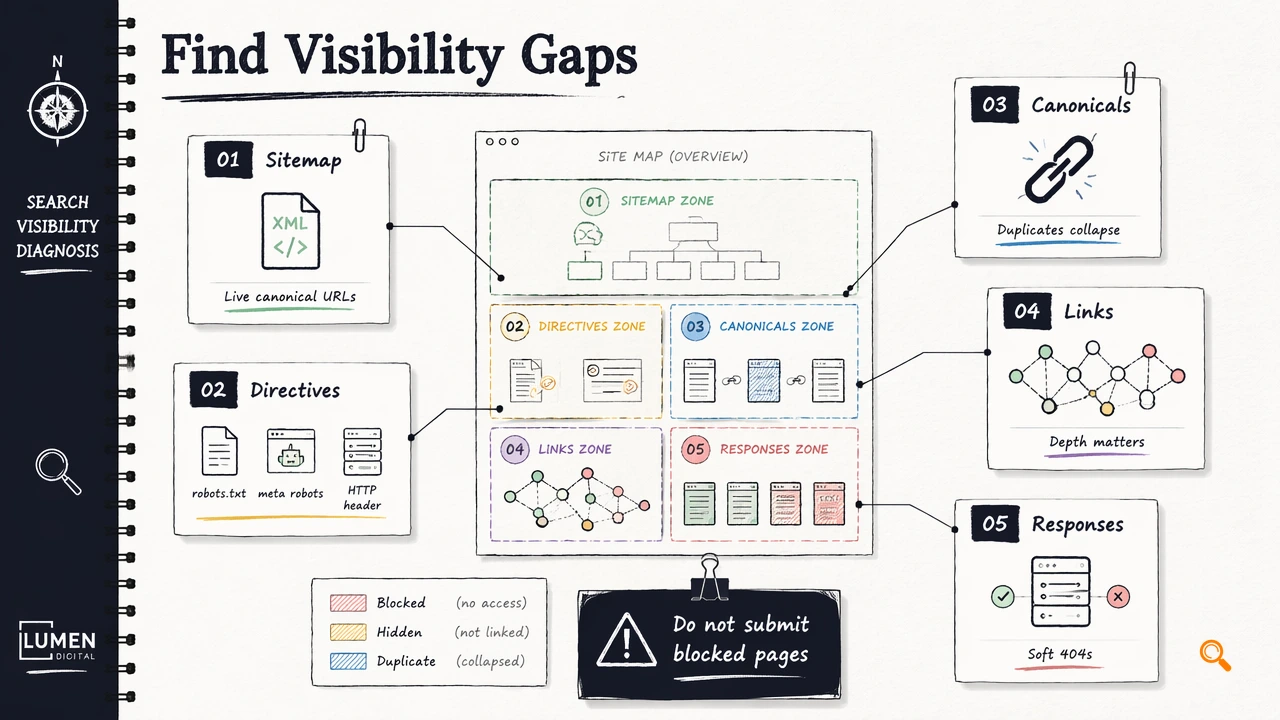
A practical audit usually reviews:
- XML sitemap coverage against live canonical URLs.
robots.txt, meta robots, and HTTP header directives.- Canonical tags, redirects, and duplicate clusters.
- Internal linking depth from high-authority pages.
- Server responses, soft 404s, and crawl budget waste.
- Google Search Console index coverage patterns.
Research on large language models by Singhal, Azizi, and Tu in Nature examined how LLMs encode domain knowledge, which matters because AI search systems increasingly summarize structured, well-labeled web information (Nature, 2023). For SEO teams, clean technical signals make pages easier for both search engines and answer engines to interpret.
Signals that deserve priority treatment
Priority should go to URLs with business value, unique content, clear intent, and frequent updates. Product pages, marketplace listings, programmatic landing pages, and news-style articles often need faster discovery than static support pages.
The Indexerhub platform fits this operational layer by helping teams organize submission activity around selected URLs rather than treating the whole site as one queue. That distinction matters for SaaS, affiliate, marketplace, and agency teams handling frequent publishing cycles.
How to choose the right indexing partner in 2026
The right partner should show how technical fixes, submission methods, and reporting connect to measurable index coverage. A buyer should ask for evidence of process maturity, not only a generic "technical SEO services" package.
Strong evaluation criteria include:
- Clear separation between crawling, indexing, and ranking work.
- Documented URL prioritization rules.
- Support for large and frequently updated sites.
- Transparent reporting cadence and ownership.
- Technical recommendations that developers can implement.
- Experience with Google Search Console and sitemap diagnostics.
Services that promise instant rankings from indexing alone should be treated with caution. Indexing only makes a page eligible to compete; rankings still depend on relevance, authority, content quality, and user satisfaction.
Buyer checklist before signing
| Question | Strong answer |
|---|---|
| What is included in the audit? | Crawl, index status, directives, canonicals, sitemaps, and internal links. |
| How are URLs prioritized? | By value, freshness, uniqueness, and technical eligibility. |
| What gets reported? | Indexed, excluded, discovered, crawled, errors, and completed fixes. |
| Who owns fixes? | SEO, engineering, content, and agency roles are clearly assigned. |
For teams that need a focused indexing workflow, Indexerhub can sit beside existing SEO tools rather than replace full technical audits. For product details and workflow fit, visit indexerhub.com.
Conclusion
A technical SEO indexing service is worth considering when valuable pages are slow to appear, excluded without clear cause, or difficult to monitor at scale. The next step is simple: audit index status, rank URL importance, fix blockers, then manage submissions through a repeatable workflow with Indexerhub or a similarly focused process.