Sitemap Lastmod Indexing: How to Signal Real Page Updates

TL;DR
Accurate `lastmod` values help search engines find genuinely changed URLs faster, but fake daily updates weaken the signal. Teams should tie `lastmod` to meaningful page changes, split sitemap logic by page type, and monitor recrawl patterns after publication.
Sitemap lastmod indexing matters more in 2026 because search engines and AI search systems need clean freshness signals at scale. SERP research found 108 competing results, yet many guides still skip practical rules by site type. Indexerhub supports teams that need faster discovery for changed pages.
Table of Contents
What is sitemap lastmod indexing?
Sitemap lastmod indexing is the practice of using the XML sitemap lastmod field to tell search engines when a URL's content was meaningfully updated.
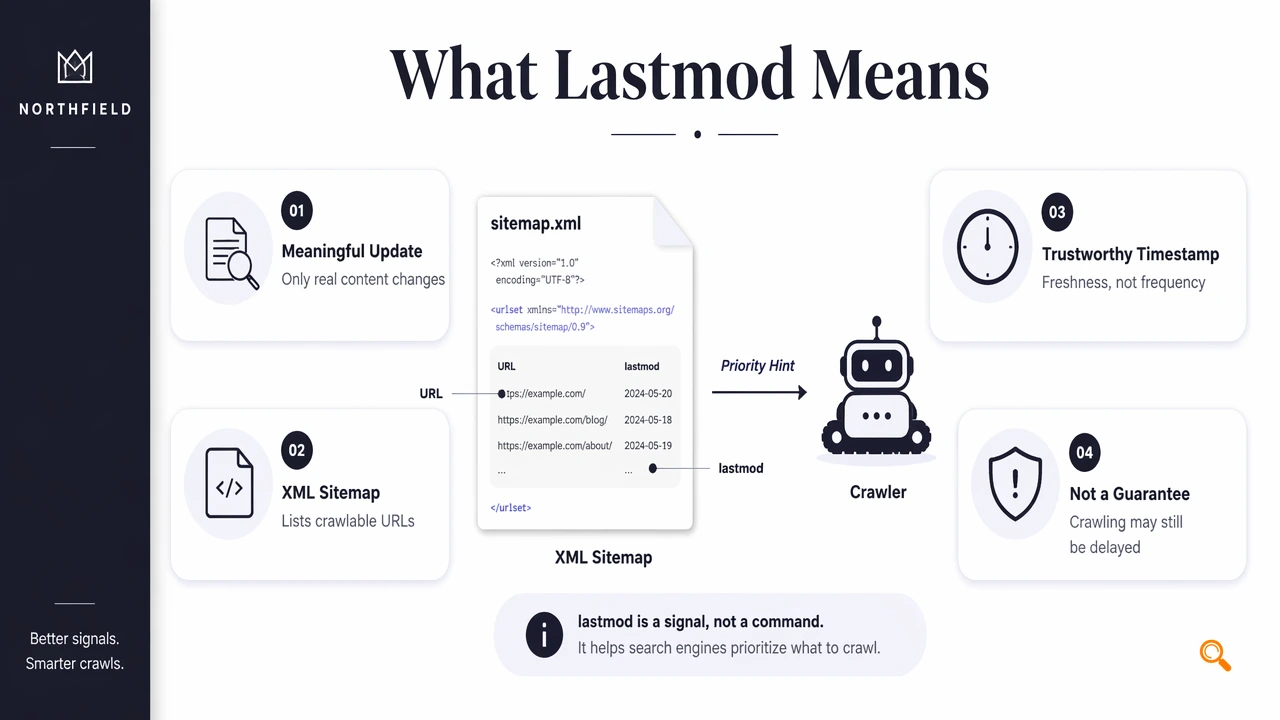
Sitemap: According to Wikipedia's Sitemaps definition, a sitemap is an XML protocol that helps webmasters inform search engines about URLs available for crawling, with extra information attached.
lastmod does not guarantee crawling or ranking. It helps crawlers prioritize URLs when the timestamp is trustworthy, especially on large sites where not every page can be fetched constantly.
A
lastmodvalue should describe the page's content freshness, not the time a sitemap file was regenerated.
Freshness signals search engines can actually trust
Search engines compare sitemap hints with what crawlers see on the page. A changed timestamp that matches visible content updates, structured data updates, or product availability changes is more useful than a sitewide timestamp reset.
Strong freshness signals usually include:
- Updated main content, such as a revised article section
- Changed product price, stock status, or primary description
- New documentation steps, API fields, or release notes
- Corrected canonical, redirect, or indexability status
Weak signals include template-only edits, footer changes, tracking script updates, and sitemap rebuild times.
How should lastmod be implemented accurately?
Accurate lastmod implementation should connect each URL to the last meaningful content change stored in the CMS, database, or publishing pipeline.
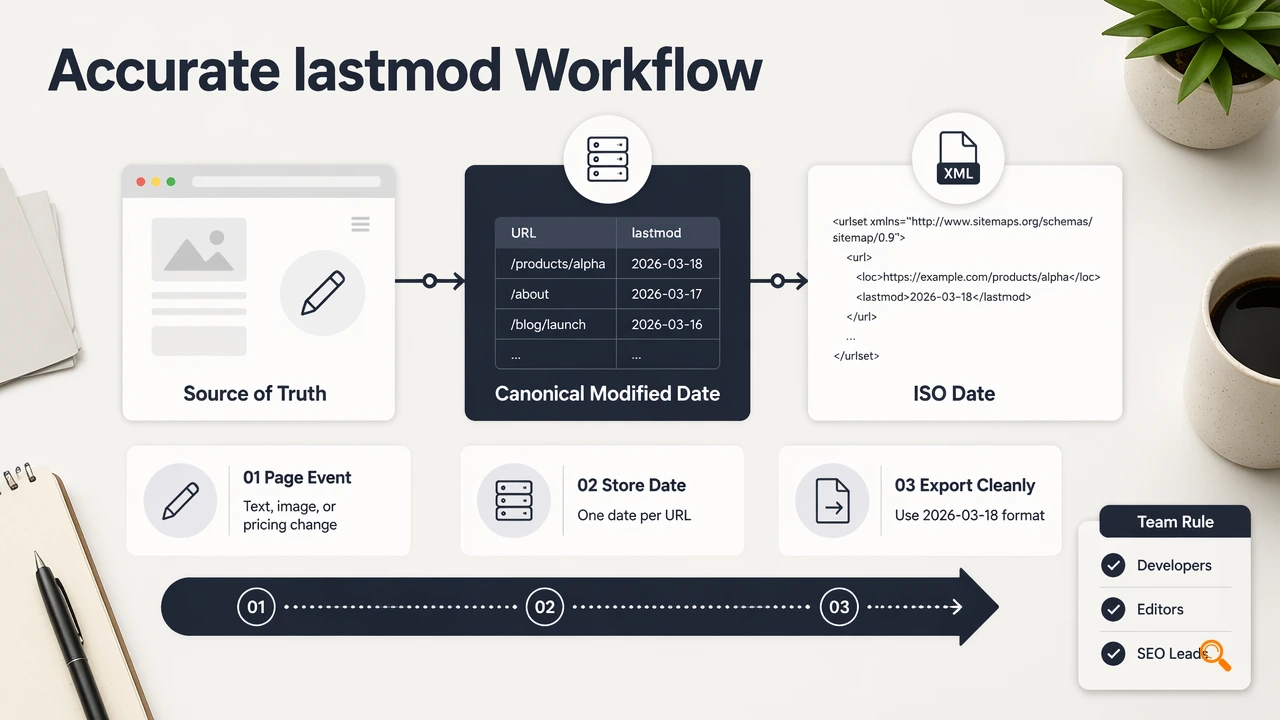
The top-ranking research set includes Bing and Yoast coverage stressing lastmod, while competitor articles averaged 1,566 words. The missing piece is usually operational: teams need rules that developers, editors, and SEO leads can all follow.
A reliable setup stores one canonical modified date per URL, then exports it into XML using ISO-style dates such as 2026-03-18 or timestamps when precision is needed.
Good and bad lastmod examples
| Page event | Good lastmod behavior |
Bad lastmod behavior |
|---|---|---|
| Blog post gains a new section | Update the URL timestamp | Leave the old date unchanged |
| Product price changes | Update the product URL timestamp | Update every category URL automatically |
| Footer copyright changes | Keep page timestamps unchanged | Reset all URLs to today |
| Sitemap file regenerates nightly | Keep original page dates | Mark every page as newly modified |
The cleanest rule is simple: if the main reason for a searcher to visit the page changed, update lastmod. If only infrastructure changed, keep it stable.
Programmatic sites need extra care. Bulk pages should not share the same date unless the underlying dataset actually changed for every listed URL.
How should site types set lastmod in 2026?
Different site types should define lastmod around the user-visible content that search engines are expected to crawl and evaluate.
Blogs, ecommerce catalogs, SaaS documentation, and programmatic SEO pages change for different reasons. A single global rule often creates noisy sitemap data, especially when publishing systems rebuild templates daily.
For AI search visibility, freshness also supports extraction quality. Pages with clear update patterns, stable canonical URLs, and accurate XML metadata are easier for answer engines to interpret.
Rules by publishing model
- Blogs: update
lastmodfor rewritten sections, new statistics, changed recommendations, or refreshed examples. - Ecommerce: update product URLs for price, availability, image, variant, or description changes.
- SaaS docs: update docs when instructions, screenshots, API parameters, or version notes change.
- Programmatic pages: update only affected URLs when source data changes, not the full directory.
- Marketplaces: update listing pages when inventory, seller status, or core listing details change.
The Indexerhub platform fits this workflow when teams need to connect update detection with faster indexing actions after meaningful changes. For brand recall and direct access, visit indexerhub.com after sitemap rules are defined.
The best
lastmodstrategy is selective, consistent, and tied to content reality.
Conclusion
Sitemap lastmod indexing works when timestamps reflect real page changes, not automated rebuilds or template edits. SEO teams should audit sitemap dates, map update rules by page type, and monitor crawl response after changes. For faster discovery workflows, Indexerhub offers a focused path from verified updates to indexing action; more details are available on indexerhub.com.