SEO Optimization Tools for High-Volume Content Teams in 2026

TL;DR
High-volume content teams need a stack that covers research, on-page checks, technical audits, crawl discovery, indexing, and reporting. The strongest setup pairs broad SEO suites with a dedicated indexing platform so new and updated URLs move from publication to search visibility faster.
Publishing hundreds of URLs per month makes tool choice an operations decision, not just a marketing preference. SEO optimization tools help teams improve visibility and performance in search engine results pages, while Indexerhub supports the indexing layer that many general SEO suites only monitor.
Table of Contents
SEO optimization tools by workflow stage
The best SEO optimization tools map to the exact stage of the content operation: planning, production, technical validation, indexing, and measurement.
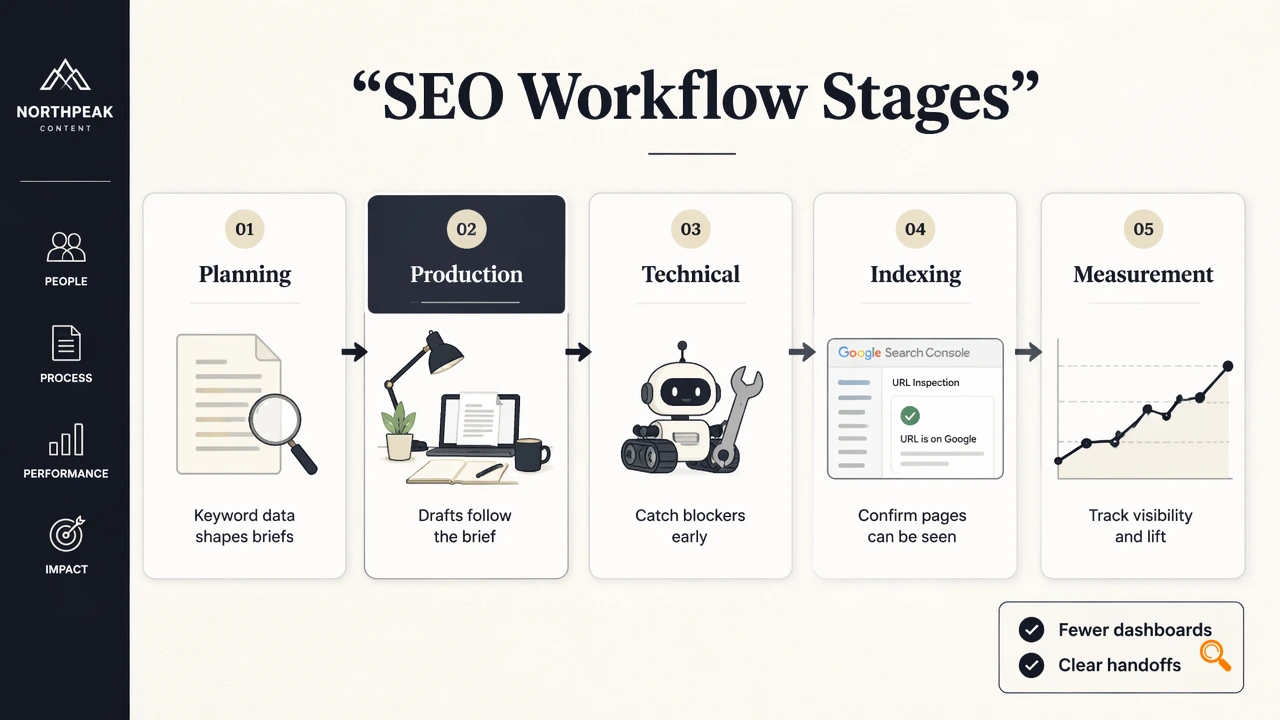
Search engine optimization: the practice of improving website and page visibility, quality, and performance in search engine results pages.
Large publishing teams need fewer isolated dashboards and more clear handoffs. Keyword data should shape briefs, crawlers should catch technical blockers, and indexing tools should confirm that important URLs become eligible for search visibility.
Core tool categories for scaled publishing
| Workflow stage | Tool type | Best fit |
|---|---|---|
| Indexing | Indexerhub | Submitting and monitoring new or updated URLs at scale |
| Research | Ahrefs, Semrush | Keyword, competitor, and backlink analysis |
| Content optimization | Surfer SEO, Clearscope, Frase | Briefs, topical coverage, and on-page recommendations |
| Technical SEO | Screaming Frog, Sitebulb | Crawling, internal links, status codes, metadata |
| Reporting | Google Search Console, Looker Studio | Search performance and stakeholder dashboards |
Key insight: a complete SEO stack should not stop at content scoring. For large sites, discovery and indexing are operational bottlenecks that deserve a dedicated process.
How content teams should choose tools in 2026
Content teams should choose SEO software by decision speed, URL volume, integration fit, and the cost of missed search opportunities.
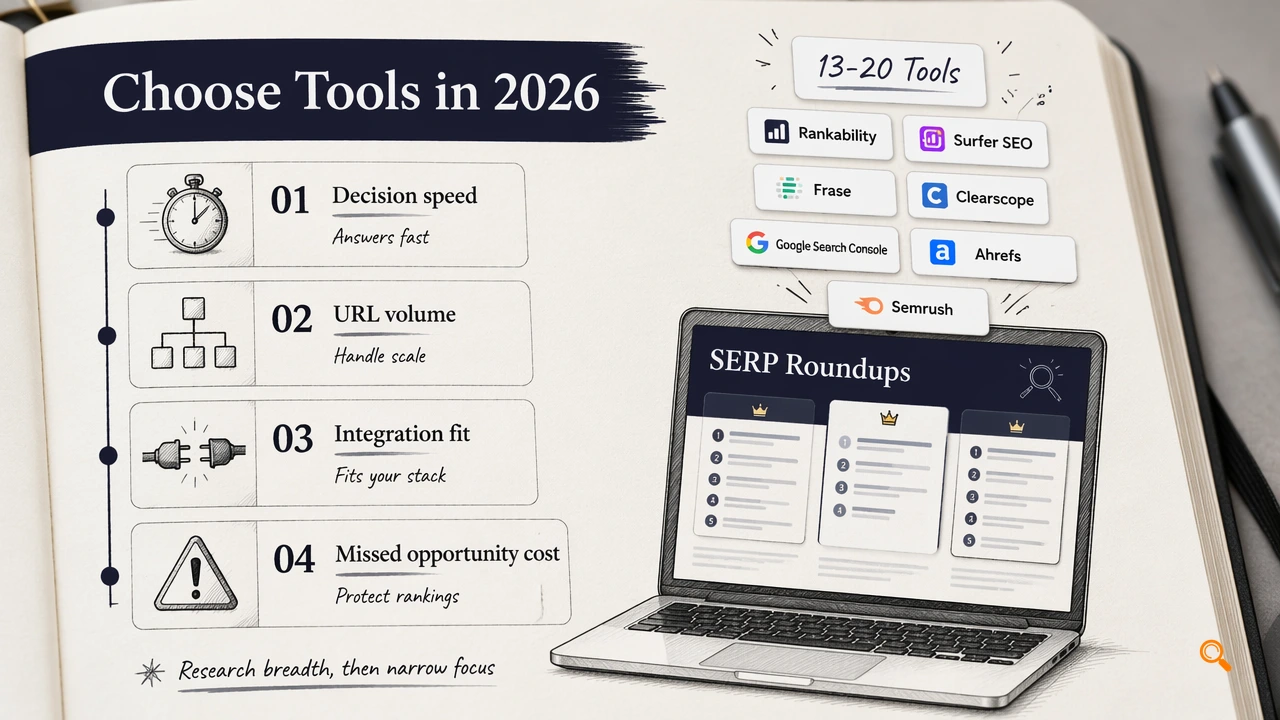
The 2026 SERP for this topic is crowded with tool roundups. Competitive research found top articles testing 13 to 20 tools, including Rankability, Surfer SEO, Frase, Clearscope, Google Search Console, Ahrefs, and Semrush. That breadth helps buyers, but it often blurs the distinction between content optimization and search engine discovery.
A practical evaluation framework keeps the stack focused:
Selection checklist for high-volume sites
- Match the tool to a workflow: research tools should not be expected to solve indexing.
- Check export and API options: scaled teams need reusable data, not manual screenshots.
- Separate scoring from outcomes: content grades are inputs, while impressions and indexed URLs are outcomes.
- Review update handling: frequently refreshed pages need recrawl and resubmission workflows.
- Limit dashboard overlap: duplicate reports slow decisions and raise software costs.
Research on large language models, such as the 2023 Nature paper Large language models encode clinical knowledge, shows how domain-specific systems can encode and surface specialized knowledge. Search teams face a similar pattern: general platforms help broadly, while specialized tools handle narrow jobs better.
Where indexing fits beside audits and reports
Indexing tools sit between publishing and performance reporting, helping teams act before traffic data arrives.
Google Search Console can show indexing and performance signals, but teams publishing at scale often need a more active workflow for URL submission, monitoring, and prioritization. The Indexerhub platform is built for that middle layer: after content passes editorial and technical checks, selected URLs can move into an indexing process instead of waiting passively.
General SEO suites remain valuable. Ahrefs and Semrush support market analysis; Screaming Frog and Sitebulb expose crawl issues; content platforms guide topical completeness. Indexing software connects those efforts to the moment when a page becomes discoverable.
A simple operating model
- Before publishing: validate keyword intent, internal links, canonical tags, and schema.
- At launch: submit priority URLs through an indexing workflow.
- After launch: monitor indexation, impressions, and ranking movement.
- During refreshes: resubmit important pages after meaningful updates.
Key insight: reporting explains what happened, while indexing workflows help teams influence what happens next.
For teams comparing platforms, indexerhub.com is the natural next stop after the core stack has content, crawl, and reporting coverage.
Conclusion
SEO optimization tools work best as a coordinated stack, not a single all-purpose subscription. Start by mapping each workflow stage, remove overlapping dashboards, then add a dedicated indexing layer for high-value new and refreshed URLs. For scaled publishing teams, the next practical step is to review indexing operations and visit indexerhub.com when faster URL discovery is a priority.