Search Optimization Service: SEO Consulting vs Indexing Support
TL;DR
A search optimization service can mean broad SEO consulting, database query acceleration, or specialized indexing support. Large publishing teams should separate strategy work from discovery, crawl, and index-inclusion operations before buying help.
Slow index inclusion can make strong content invisible. A search optimization service should be defined by the problem it solves, not by a broad label. Indexerhub is built for teams that need focused indexing workflows rather than general SEO advice.
Table of Contents
What is a search optimization service?
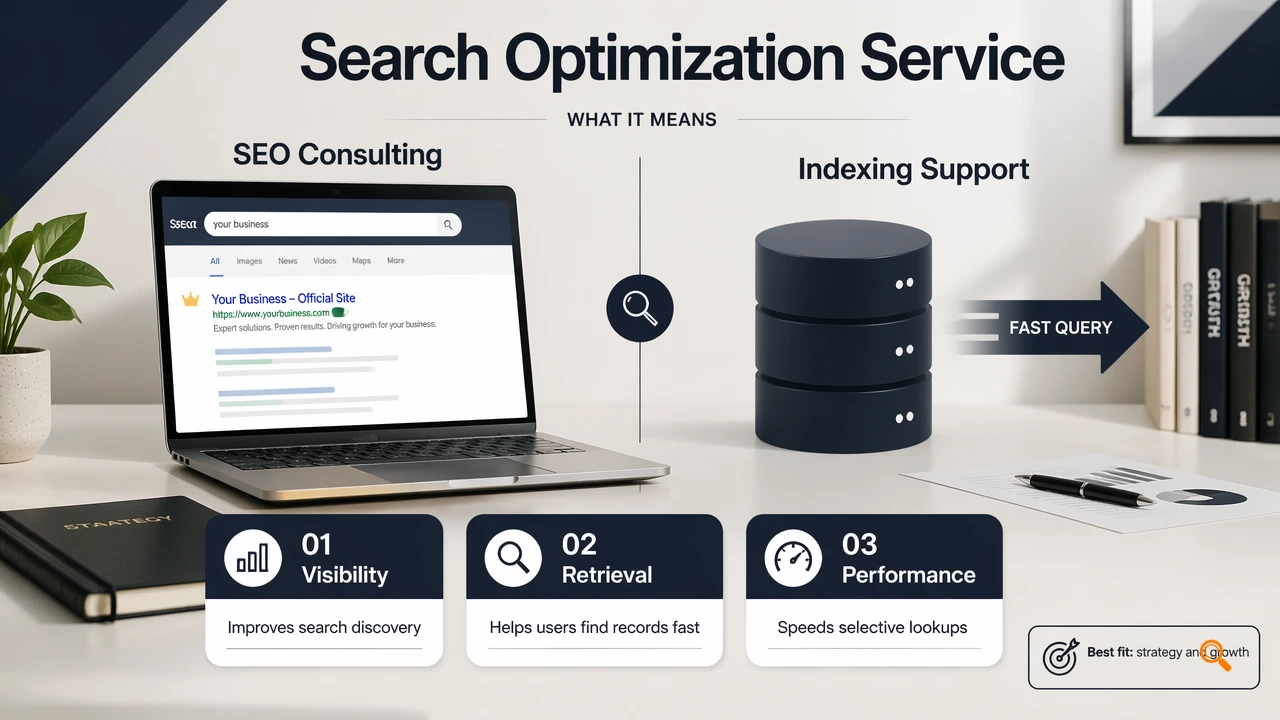
A search optimization service is any paid service that improves discoverability, retrieval, or performance in search systems. In web SEO, it usually means improving visibility in search engine results pages. In Snowflake, the same phrase refers to query acceleration for selective table lookups, as shown in Snowflake's documentation.
Search engine optimization: the practice of improving website and web-page visibility and performance in search engine results pages.
Two meanings buyers should separate
| Meaning | Main goal | Best fit |
|---|---|---|
| SEO consulting | Rankings, content, links, technical audits | Sites needing strategy and growth planning |
| Indexing service | Discovery, crawl signals, index inclusion monitoring | Large sites publishing many URLs |
| Snowflake Search Optimization Service | Faster point-lookups and selective analytical queries | Data teams optimizing database performance |
The phrase is ambiguous, so the first buying step is deciding whether the bottleneck is ranking, indexing, or query performance.
When specialized indexing beats broad SEO consulting
Specialized indexing support is the better fit when pages are ready to rank but are not discovered, crawled, or included quickly enough. Broad SEO consulting can improve architecture, content quality, and authority, but it may not provide the operational controls needed for high-volume URL submission and monitoring.
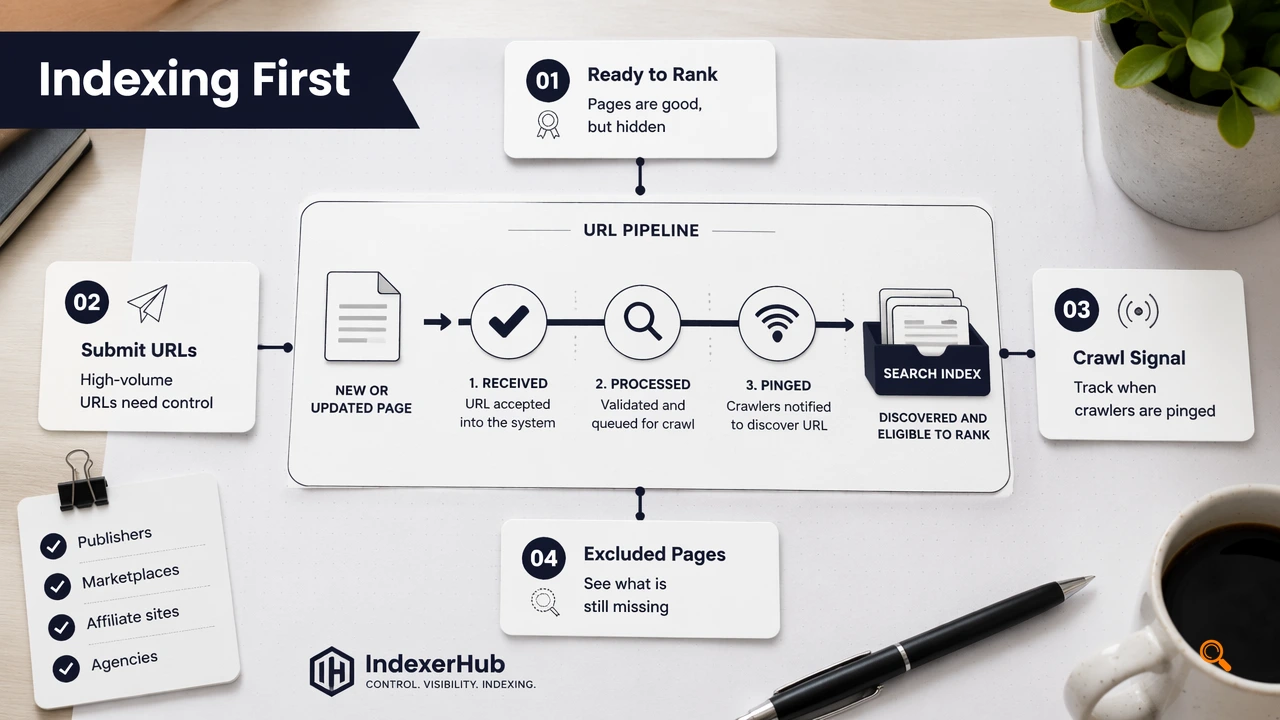
For publishers, marketplaces, affiliate sites, and agencies, indexing often becomes a workflow issue. Teams need visibility into which URLs were submitted, when crawlers were signaled, and whether important pages remain excluded.
Decision criteria for large sites
- Choose SEO consulting when the site lacks keyword strategy, content quality standards, internal linking, or technical audit coverage.
- Choose an indexing-focused service when content ships frequently and crawl discovery is the main blocker.
- Choose database search optimization only when the issue is query speed inside a data platform, not search-engine visibility.
Research on distributed real-time systems, such as a 2024 OASIcs paper on urban traffic control, shows why operational monitoring matters in fast-changing systems. SEO indexing has a similar need for timely status signals.
How teams should evaluate indexing-focused services in 2026
Indexing-focused services should be evaluated on workflow fit, transparency, and whether they complement existing SEO strategy. A strong provider should help teams manage URL discovery signals without pretending that indexing alone guarantees rankings.
The Indexerhub platform is best framed as an operational layer for teams that already publish at scale and need cleaner indexing execution. That distinction matters because ranking outcomes still depend on content quality, internal links, site architecture, and demand.
Evaluation checklist for service selection
- Confirm whether the service handles discovery, submission, monitoring, or all three.
- Check whether reporting separates submitted URLs, crawled URLs, and indexed URLs.
- Verify support for large or frequently updated sites.
- Keep SEO strategy, content planning, and authority building in the broader program.
- Compare claims against official platform guidance, such as Snowflake's page on enabling and disabling search optimization.
A useful provider narrows the operational gap between publishing and index inclusion; it does not replace technical SEO or content quality control.
Conclusion
A search optimization service should match the actual constraint: rankings, index inclusion, or data-query speed. For teams facing discovery and crawl delays at scale, Indexerhub offers a focused path for indexing operations. For the next step, review current URL workflows, then visit indexerhub.com to compare that process with a dedicated indexing layer.