Search Engine Optimizer SEO: What the Role Owns in 2026

TL;DR
A search engine optimizer should own more than rankings, metadata, and content briefs. In 2026, the role must include discovery, crawl access, index eligibility, monitoring, and escalation so valuable pages can appear in search and AI answers.
A search engine optimizer seo role fails when it stops at title tags and keyword rankings. Search engine optimization: the practice of improving the visibility and performance of web pages in search engine results, with indexing as the gate between publication and discoverability. Teams that publish at scale can use Indexerhub to make indexation work more measurable.
Table of Contents
What should a search engine optimizer own?
A search engine optimizer should own the full path from content strategy to search visibility, not only page-level recommendations. Major guides, including Google's Search Engine Optimization Starter Guide and Digital.gov's SEO guidance, frame SEO around helping search engines find, understand, index, and surface useful content.
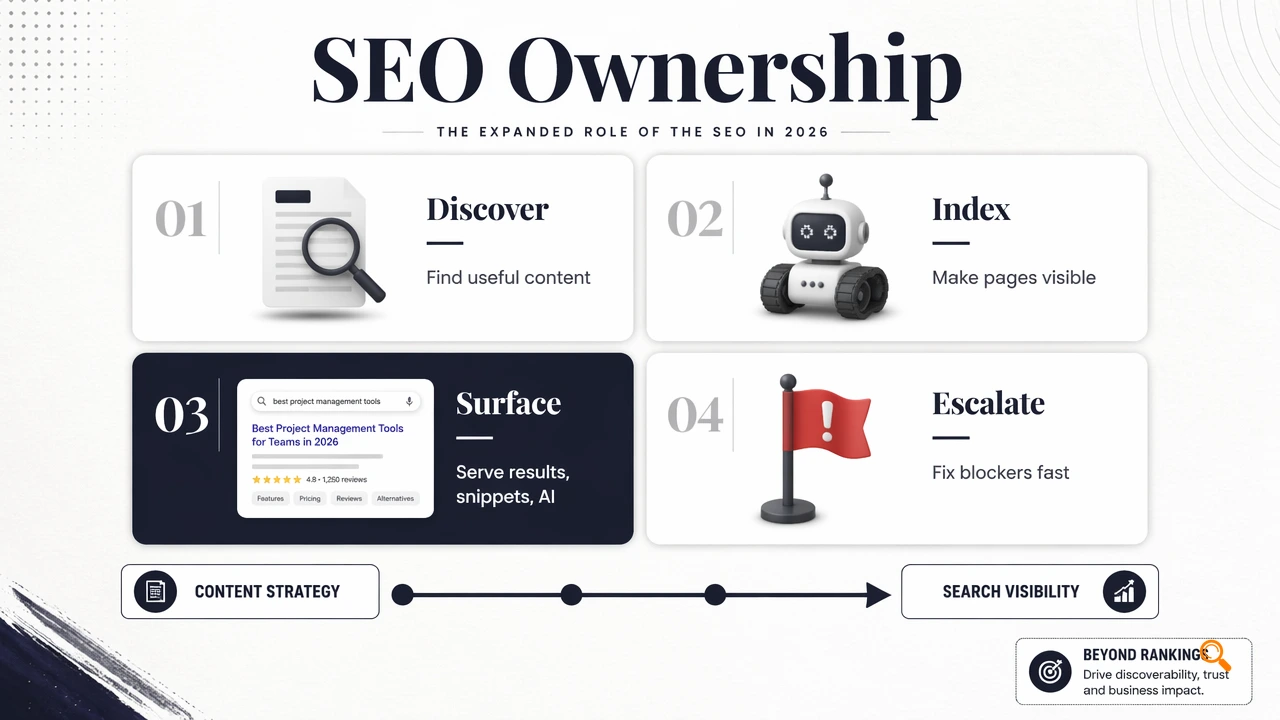
The practical scope has expanded in 2026 because search results now include classic SERPs, AI Overviews, vertical search, and answer engines. Research on generative AI by Feuerriegel, Hartmann, and Janiesch describes how generative systems synthesize information, which raises the value of clear entities, structured facts, and crawlable source pages.
Key insight: rankings are an outcome; discovery, crawlability, index eligibility, and content quality are operating responsibilities.
Core ownership map for SEO teams
| Responsibility | What it means | Success signal |
|---|---|---|
| Discovery | Search engines can find URLs through links, sitemaps, and feeds | Important URLs appear in crawl logs |
| Crawl access | Bots can fetch pages without blocks or waste | Clean robots.txt, stable status codes |
| Index eligibility | Pages are canonical, unique, and not excluded | Valid canonical and no unintended noindex |
| Relevance | Content answers a real query with entity clarity | Qualified impressions and citations |
| Measurement | Teams track coverage, rankings, and traffic together | Issues are found before traffic drops |
Why indexing belongs in SEO operations
Indexing belongs in SEO operations because a page cannot earn rankings, snippets, or AI citations if search engines do not include it in their searchable systems. Digital.gov defines SEO as enabling search engines to index and surface content, which makes indexing a primary function rather than a technical afterthought.
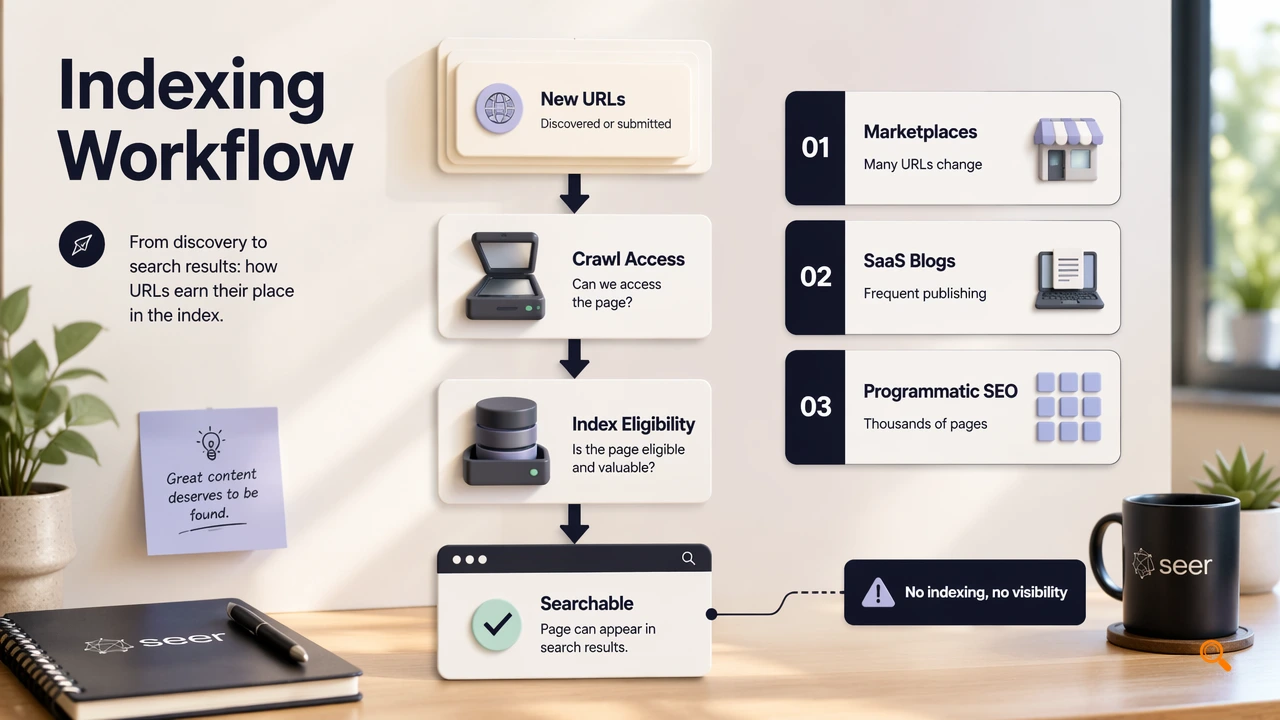
Large sites face special pressure. Marketplaces, SaaS blogs, affiliate sites, and programmatic SEO projects may publish hundreds or thousands of URL changes in a short window. Without a defined indexing workflow, teams may optimize pages that search engines have not processed.
Common indexing checks should stay simple:
- Confirm the URL returns a crawlable
200status. - Check canonical tags and duplicate clusters.
- Validate sitemap inclusion and last modified signals.
- Review
robots.txt, meta robots, and header directives. - Compare indexed pages against priority page lists.
Indexerhub's indexing workflow
The Indexerhub platform fits the operational side of SEO by helping teams focus on whether important URLs are discoverable, eligible, and monitored after publication. That matters most for sites with frequent updates, large URL inventories, or client portfolios where manual checks do not scale.
A clear indexing workflow also gives SEO, engineering, and content teams a shared language. Instead of treating visibility loss as a vague ranking issue, teams can separate discovery gaps, crawl access constraints, canonical conflicts, and quality concerns before escalating.
How SEO changes with AI search in 2026
SEO in 2026 requires content that search engines can retrieve, verify, and summarize across classic results and AI-generated answers. The Nature paper Large language models encode clinical knowledge examined how large language models encode domain knowledge, showing why authoritative, well-structured source material matters in high-stakes information settings.
For SEO professionals, the lesson is practical. Pages should define entities clearly, answer questions directly, cite credible sources, and avoid burying important facts in long narrative blocks. LLMs favor extractable passages, tables, definitions, and consistent terminology.
AI visibility starts with indexable pages, but it grows through clarity, authority, and repeatable structure.
A 2026 framework for optimizer priorities
The strongest search engine optimizer seo programs now connect classic SEO tasks with AI-search readiness:
- Entity clarity: name products, categories, people, standards, and use cases directly.
- Answer structure: place a direct answer below question-based headings.
- Technical access: keep key pages crawlable, fast, canonical, and internally linked.
- Index monitoring: track whether priority URLs remain eligible after releases.
- Escalation rules: assign ownership when templates, directives, or rendering block visibility.
For teams building this discipline, indexerhub.com can serve as a direct starting point for evaluating indexation workflows. Indexerhub is best treated as part of the operating system around SEO, alongside analytics, rank tracking, content planning, and log analysis.
Conclusion
A search engine optimizer seo role in 2026 should own the complete visibility pipeline: discovery, crawl access, index eligibility, structured content, and measurement. The next practical step is to audit priority URLs, define escalation rules, and visit indexerhub.com when indexing needs a more consistent operating process.